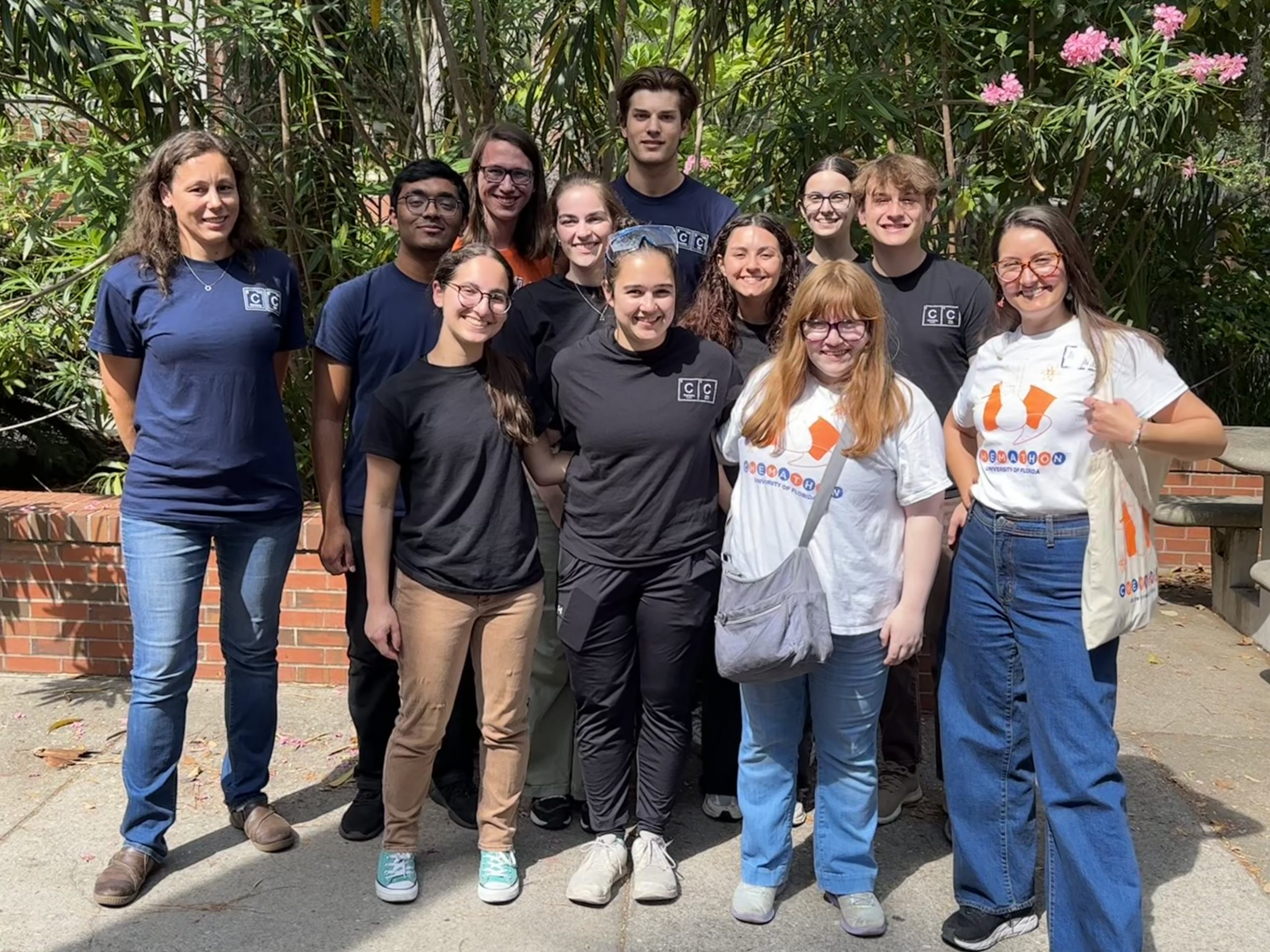


The Department of Chemistry is pleased to invite you and your chemistry students to our University of Florida Chemathon annual competition.
This event requires teachers and/or chaperones to be responsible for the care, custody, and control of the minor participants; the University of Florida will not provide supervision. More information can be located at: Youth Compliance – University of Florida
Deadlines
March 20, 2026 = Registration Deadline*
April 17, 2026 = Emergency Contact, Parental Consent Waiver, and Environmental Health and Safety Parental Consent Form Deadline. All completed forms must be sent to chemathon@chem.ufl.edu.
*There is a $10 registration fee for each participant (student, teacher, chaperone); this fee covers breakfast snacks and lunch. Details on how to pay are provided in the registration link. T-shirts are also available for purchase (see below).
Required Forms
Registration Form: Register teams and chaperones (or teachers). All students, teachers, and chaperones should be included in the registration form.
Thank you everyone for your interest participating in Chemathon 2026! Due to space limitations, registration had to be closed early. If you were not able to register for this year’s event, be sure to check-in again for Chemathon 2027!
Emergency Contact Form: Emergency contact information for all attendees. This is required for all students and adults attending the event and must be received prior to the day of the event.
Parental Consent Wavier Form: Required for each student.
Environmental Health and Safety (EH&S) Parental Consent Form: This form from EH&S will be sent later to registered teams from the Director, so teachers should monitor their emails daily.
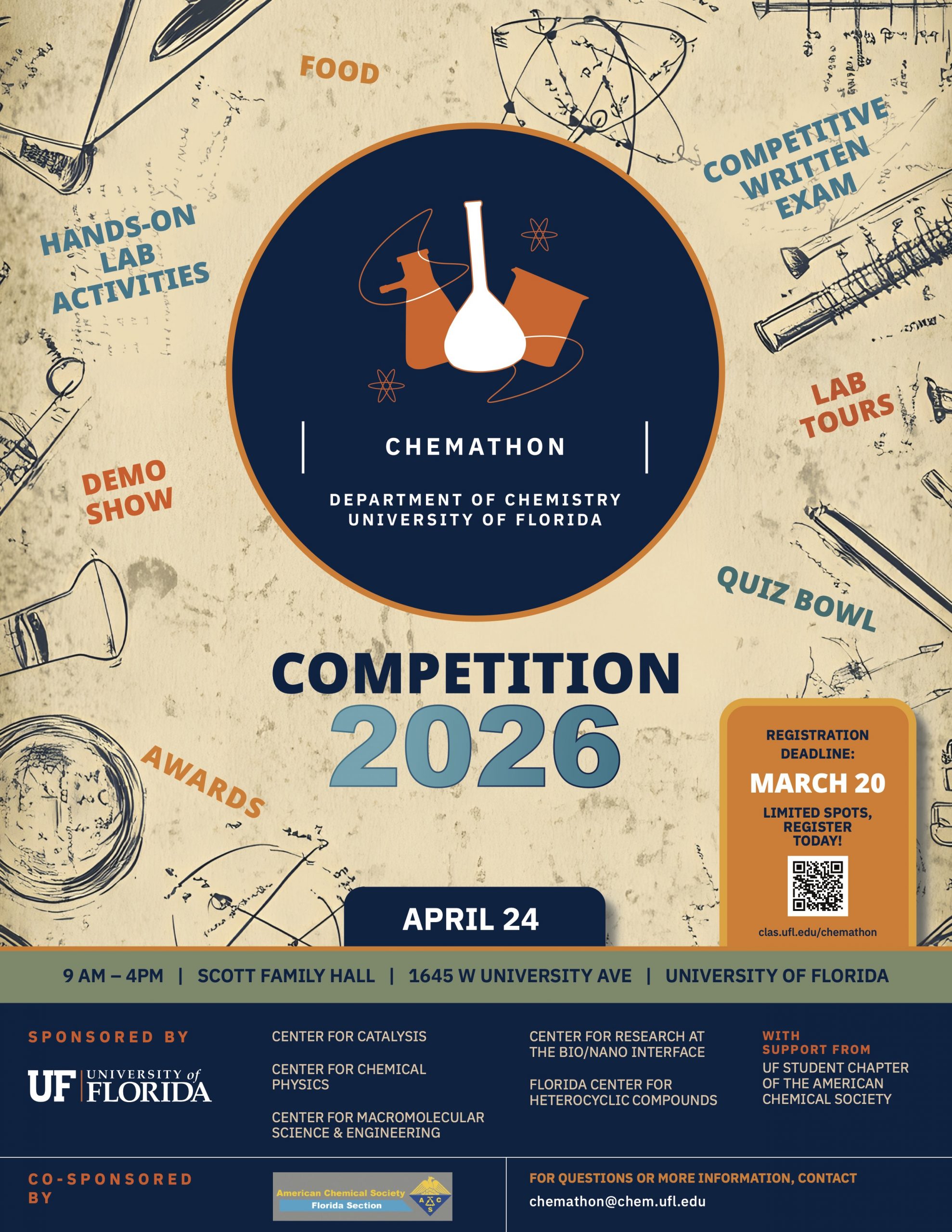
Teams register as either Level I or Level II. Each school can bring up to 2 teams of 4 student each.
Level I = Similar to our Intro to Chemistry course (CHM1025) which covers:
- Measurements and units
- Components of matter
- Naming compounds
- Stoichiometry of compounds
- Stoichiometry of reactions
- Three major aqueous reactions
- Calorimetry
- Atomic and electronic structure
- Chemical bonding
Level II = Covers all of Level I and all of General Chemistry (CHM2045):
- Compounds
- Stoichiometry
- Aqueous reactions
- Gases
- Thermochemistry
- Quantum theory
- Electron configuration and periodicity
- Chemical bonding
- Shapes of molecules
- Molecular orbitals (VB, hybridization, MO theory)
- Intermolecular forces
- Solids, liquids, and phase changes
- Mixtures and solutions